Rock tumbling isn’t just about rounding out rough chunks of raw material. For many lapidary enthusiasts, the real thrill comes from working with carefully cut slabs and unique specimens. However, tumbling delicate or oddly shaped pieces presents a unique set of challenges.
In our latest video, we empty two large tumblers to reveal exactly how we process beautiful slabs, amethysts, and intricate specimens without cracking them. If you’ve ever hesitated to tumble a thin, beautiful slab of tiger eye or bloodstone, this breakdown is for you!
Key Takeaways from Unloading the Tumblers
Tumbling thin slabs requires a completely different approach than a standard batch of rough rocks. Here are the secrets to protecting your delicate cuts while still achieving an incredible, pre-polish sheen.
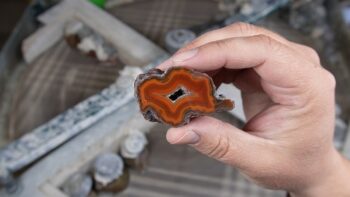
The 60/90 Rough Grind and the “Small” Strategy In the first barrel shown in the video, the stones have just completed a 10-to-14-day cycle in a 60/90 coarse grit [00:08]. Because the main focus of this batch was a large, intricate piece of Crazy Lace Agate (full of beautiful “eyes”), a very specific loading technique was used. To ensure this larger feature stone came out perfectly smooth without aggressive bruising, a massive amount of “smalls” (tiny filler stones like prairie agates) were used [02:24]. These smalls act as a buffer, ensuring the large specimen gets ground evenly rather than simply banging against the sides of the barrel.
Reusing the Slurry for 1500 Grit Opening the second barrel reveals a fantastic lapidary trick. This barrel is running a 1500 grit (fine pre-polish), but the mixture inside looks incredibly thick—almost like a thin pudding [07:36].
Why? Because the slurry is intentionally reused! When processing delicate slabs, saving and reusing that worn-out, thickened slurry adds a crucial layer of suspension to the barrel [05:29]. Instead of washing it all down the drain between cycles, you simply leave the thick mixture in the barrel and add a little bit of fresh grit.
Protecting Thin Slabs from “Banging” The primary reason for using that thick, reused slurry—along with a healthy dose of ceramic media—is to eliminate banging [09:26]. When you run delicate slabs in a watery grit mixture without proper cushioning, the edges will chip and the faces can fracture.
By running the slabs in a highly cushioned environment, you can safely process very thin pieces. The video showcases massive, thin slabs of bloodstone and tiger eye that emerge from the tumbler perfectly intact and astonishingly smooth [10:41].
Beautiful Materials Ready for Polish
One of the great joys of emptying the pre-polish tumbler is seeing the dramatic transformation of the material before the final polish is even applied. Even totally dry, these stones have a distinct, silky gleam to them [12:27].
Some of the standout materials from this batch include:
- Crazy Lace Agate: A giant specimen with fantastic, prominent “eyes” [11:46].
- Amethyst: The difference between rough amethyst going in and coming out of a buffered 1500-grit cycle is absolutely stunning [09:13].
- Bloodstone (Fancy Jasper): A favorite for tumbling slabs, these pieces show off beautiful, mottled colors and are ready to take a mirror polish [08:42].
- Tiger Eye: Noticeably smoother to the touch and prepped perfectly for the final shine [13:04].
With the 1500 grit cycle complete, these slabs and specimens are incredibly smooth and ready to head straight into the final polishing stage—bringing out that brilliant, glass-like reflection.
Feeling inspired to try tumbling your own slabs? Check out our selection of beautiful rough stones, tumbling media, and pre-cut slabs to get your next project rolling!